Although this website was initially designed for students in my Qigong classes, it is also for anyone generally interested in this very interesting meditation practice we call Qigong.
I start at the beginning, because maybe you are new to this –but also because I found great insights in the most basic, most foundational aspects of this healing modality in my concurrent work as an acupuncture teacher. Let’s assume we don’t know anything, start fresh at the beginning, and get to know each other.
I’m Roger, an experienced Qigong teacher in western North America and Hawai’i. I taught Qigong and acupuncture in a very full-time position at a leading institution for training Traditional Chinese Medicine practitioners in the US, the Oregon College of Oriental Medicine. I taught about 70 first year students every week for 3 quarters of the year, with an additional 30 or more patients from our clinic year-round. This was a rare opportunity to teach Qigong in a deep and sustained way.
My last employer was the state-supported medical school in Oregon, OHSU, where I worked as an acupuncturist and Qigong meditation teacher in the student health center. Our patients were both medical and nursing students, along with post-doc researchers. I witnessed the dynamics around clinician burnout just prior to the last pandemic. Qigong was part of our response to this issue.
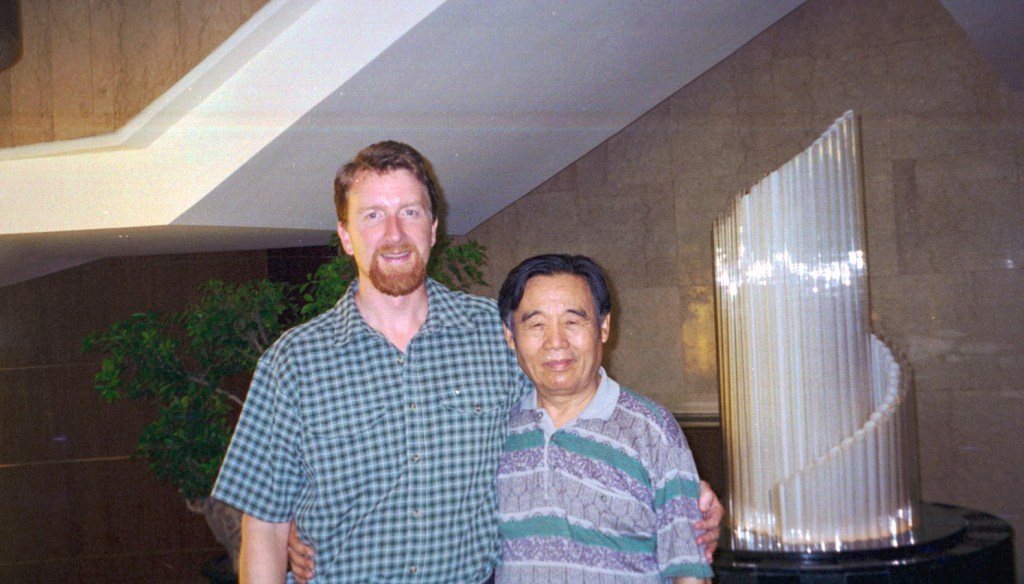
My own training took me to Beijing 4 times for learning with a variety of Qigong teachers. These were organized by my wonderful teacher, Chen Hui-Xian, who taught over 10,000 students in North America. On the second trip in the year 2000, she introduced us to the teacher of a family lineage developed over 19 generations, based on the movements and imagery of a turtle. Known as ‘Gui Gong’ or Turtle Qigong, the teacher’s name was Wang, Zhe-Zhong. He was very personable, and strongly encouraged us as a group to carry his form.
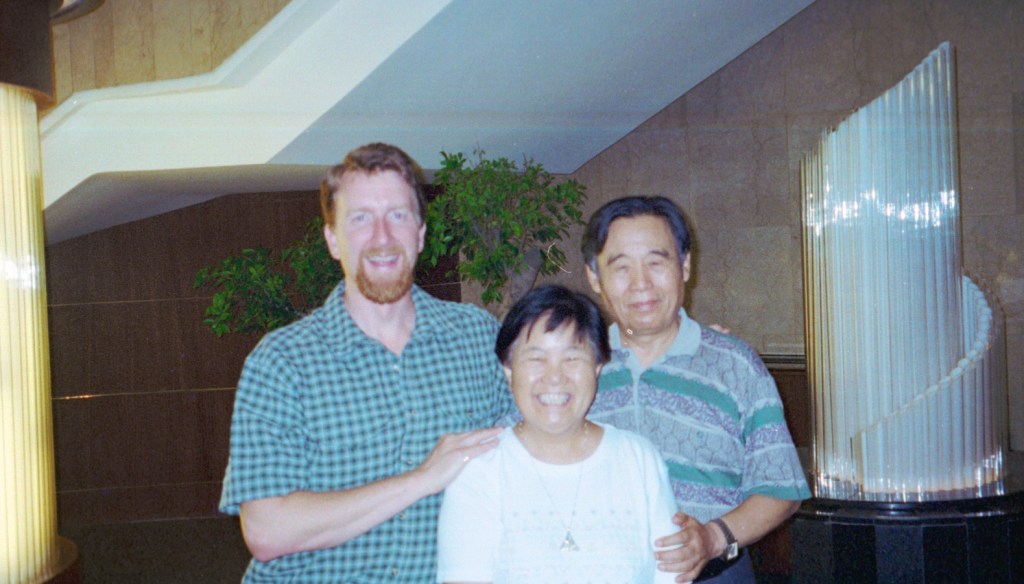
He asked us to teach his family treasure without alteration. I have endeavored to do this, and I believe this has been accomplished.
Wang was the most personable of the wonderful Qigong teachers we studied with in Beijing. He was very calm, but had an abundance of Qi that would only grow as he worked daily, into the early morning hours on patients visiting from North America.
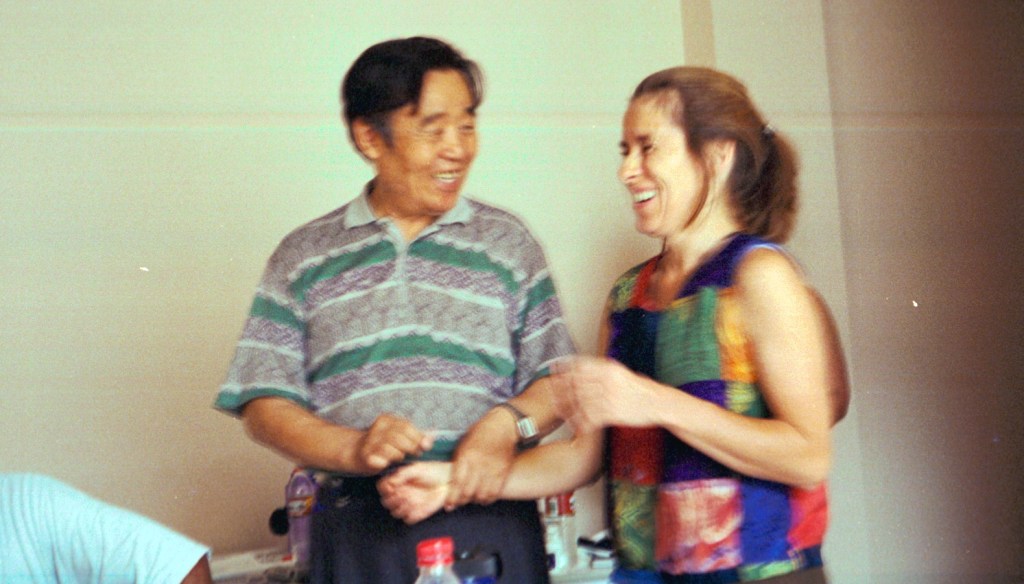
His family Qigong lineage hailed 19 generations back, in Anhui province of southern China. It was carefully transmitted from father or grandfather to select offspring. Wang was the first to teach women–his own daughter; the first to teach outside his family, and the first to train foreigners. This was during the Qigong Boom in the 1980s in China, when many traditional practices came out of the margins of society. It also may have helped that he traveled to the United States several times on trade delegations, where he came to enjoy the cross-cultural exchanges and meeting people.
Curiously, he had a speech impediment, a stammer at times. However whenever he spoke on Qigong, his voice was flawless. His favorite form of work with patients in China was using his voice with them over the telephone for healing. It was a developed gift that became the subject of research in Europe and Asia. This is an example of how some of our life challenges or limitations are the very areas that our healing gifts may be.
His forms were simpler than those we were working with, but carried a lot of Qi. Chen recommended them for my teaching, and Turtle Qigong had already become my favorite. The form seemed a better fit for my students, more simple and calming to balance the demands of urban life and graduate school. Of the half-dozen forms I was authorized to teach, this one had the most staying power. Some of my former students practiced the very simple Part 1 standing meditation with joy for years.
I witnessed some patients from our clinic have outstanding and rapid results with this form that I could not always understand. Every modality has its share of miracle stories, I tell my students. The interesting thing here is that the success is had with simple but regular movements, combined with some kind of transmission of Qi or feeling. Wang called it a Heart Transmission and said it was rarely offered in Qigong. That feeling is an enthusiasm I hope to share some of here, but in a balanced way to avoid some of the excesses in our field.
 Qigong Meditation