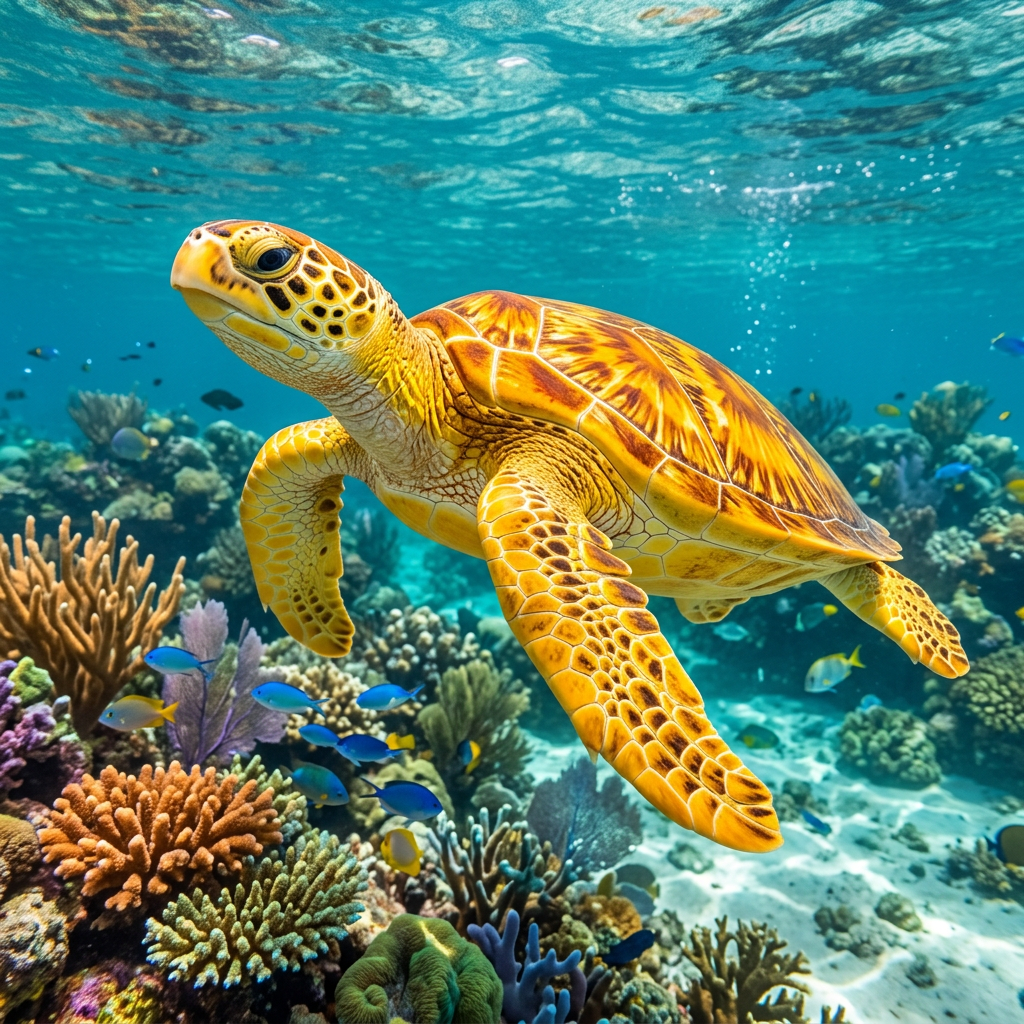
Turtle Qigong is called by its progenitors in the family lineage Gui Gong, literally Turtle Gong.
The strengths and particular advantages of this form in my experience are several:
- Simplicity- One of the greatest apparent obstacles to learning and also teaching Qigong is the complexity of the various forms.
- Some teachers may simplify a complex Taiji form into a digestible hour-long experience for casual workshops, but they can feel watered down.
- My finding is that some students need something complex enough to feel engaging for them so they don’t get bored, and others need a form that is very simple to match both their temperament and their unique approach to spirituality, so they don’t get overwhelmed.
- Turtle Qigong has great simplicity (in the Part 1 Standing meditation), but offers complexity when needed (in Parts 2 and 3, along with the massage form). Parts of the more involved forms can be done by themselves when time or temperament requires it.
- Another observation is that the further we go in most Qigong forms, the simpler it gets.
- Staying power- I am certified to teach 6 different Qigong forms and was invited to teach workshops in 5 different time zones. Of all the forms I taught, Turtle is the only one where students reach out to say they are still practicing it, years or decades later. For myself, this form has been most compelling for me during difficult transitions in my life, when I needed the most grounding.
- Stability- Qigong forms can be very strong, so the student has to be ready, and not all forms are suitable for everybody.
- One form that I was asked to teach, Soaring Crane, seemed to be too strong for some very capable students, who thrived on other very dynamic practices.
- My own teacher, Professor Chen, advised against learning dynamic forms if one has a history of medical treatment for either psychosis or bipolar diagnoses. This is one reason why we went to China to learn a specific Qigong form for those conditions, the Rolling Qigong described on a different Page of this site.
- In teaching Turtle, I was very happy that no student came close to de-stabilizing with this form. It is the most grounding of all forms I learned.
In my own experience, this form never fails to bring a deep smile to my face. The body’s responses to Qigong are interesting and change over time. After doing Qigong for a few years, whenever I practiced any form there was often a stream of hot tears, without any emotion. I interpreted this as a way of my liver Qi clearing itself naturally with the practices. That lasted for only a year. For many years now, many parts of Turtle forms (and always the ending) have my head feeling full with golden light and a deep smile. I sometimes wonder what chemicals are bathing in my brain at those moments. Qigong forms tend to bring us exactly what we need. Be open to your own experience during Qigong, whatever it is, and try not to make comparisons.
The Needs of the Age-
My hunch since beginning a healing practice in the 1980s is that life on this planet has both more challenging complexities and also more new solutions than before. This impression has only grown.
Mental stimulation has increased globally with the internet and social de-stabilization, along with environmental challenges of chemical exposure and global warming. My hope is that natural therapies such as Qigong, along with scientific findings, can balance these growing challenges. Forms like Turtle Qigong may be well-suited to the demands of this time.

