
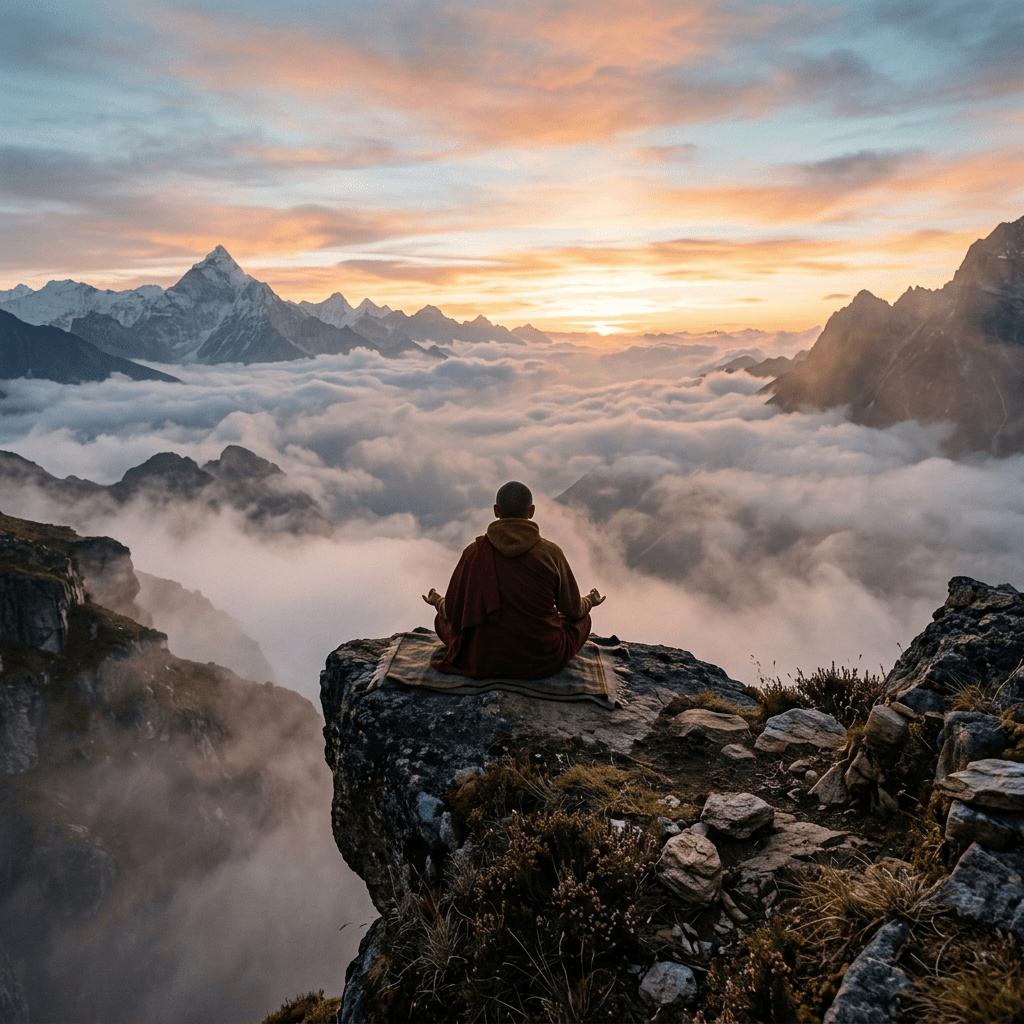
‘How you do something is how you do anything’
Before we talk about Qi and even breathing, we need to check our attitude.
“Live without expectations: only love,” was a memorable phrase that the Turtle Qigong teacher Wang Zhe-Zhong said at one of his first talks to us, an eager group of foreign students in Beijing. This concise advice avoids many of the pitfalls that can be found when learning a new skill, perhaps especially in internal cultivation.
There can be unconscious ambitions that set the traps. Most can be avoided with sincerity, common sense, and a simple curiosity or willingness to try something new, along with a humility to course-correct if needed.
The fun part to think of is: Who or what inspires you the most?
This changes for me over time. A recent source of inspiration came from the 2,200 year-old source text for my field of acupuncture, the Yellow Emperor’s Inner Classic. There are clear new translations thanks to AI, so that my understanding of this text is blossoming with the new technology.
| The teachings of the sage rulers in ancient times instructed people …[to] maintain a tranquil and untroubled mind by embracing emptiness and non-action, so true qi would follow naturally, with spirit and energy remaining internally protected. Under these conditions, how can illness arise? Therefore, their aspirations were leisurely and desires few; their minds remained at peace without fear; their bodies worked but did not tire. Qi flowed smoothly in accordance with nature. Each followed his own inclinations and attained what he wished for. Thus, they found satisfaction in their food, were content with their clothing, took joy in their customs, and did not envy those above or below them. The people of that time were said to be simple and unpretentious. Desires could not weary their eyes, licentiousness and evil influences could not confuse their minds. Whether foolish or wise, virtuous or unworthy, they were untroubled by external things—thus they conformed to the Dao. This is why they could all live beyond a hundred years, with their physical functions not declining: because their virtue was complete and free from danger. |
Did ancients live longer? There are some journalistic case reports from a century ago of long-lived individuals in China, but it is hard to verify from sketchy birth records. There are enough Blue Zone centenarians scattered all over the world to give us quantitative inspiration, but what is the attitude that can support a healthy and well-lived life–and what might go beyond our limited concepts? Writings on ancient China are the stuff of myth, so far back that nobody knows the exact details, but these give us some guide points for self-assessment and perhaps inspiration.
What follows is a teaching from the Yellow Emperor–who almost always teaches by asking questions, rather than lecturing or giving orders. It outlines potential levels for spiritual Attainment, from the same website (Line 4):
Huangdi said: “I have heard that in ancient times there were True Persons who could lift up heaven and earth, grasp yin and yang, breathe in essence and qi, stand alone while guarding their spirit, with flesh and muscles unified as one. Thus they could live as long as heaven and earth endure, without end—this is the Dao of life.
In the middle ancient times [more recently], there were Supreme Persons who possessed pure virtue and complete understanding of the Dao. They harmonized with yin and yang and regulated themselves according to the four seasons. They withdrew from worldly affairs and cultivated their essence to preserve their spirit. Traveling freely between heaven and earth, they could see and hear beyond the eight directions. These individuals extended their lifespans and strengthened their bodies; thus, they also belonged among the True Persons.
Next were the Sages, who dwelled in harmony with heaven and earth and followed the principles of the eight winds. They adjusted their desires to fit within worldly customs, harbored no resentment or anger, did not wish to separate from society, wore appropriate clothing, and acted without seeking admiration from convention. Externally, they did not exhaust themselves through worldly affairs; internally, they were free from burdens of thought. Taking tranquility and joy as their purpose, and personal contentment as their achievement, their bodies remained unimpaired and their spirits undispersed—thus, they too could live to be over a hundred.
Next were the Virtuous Persons, who followed the laws of heaven and earth, emulated the sun and moon, distinguished the stars and constellations, understood yin and yang in their movements, differentiated the four seasons, and aspired to unite with the Dao of ancient times. They too could extend their lifespans, though within defined limits.
I think most of us could aspire for Sagehood, give or take a few decades off the magic number of 100. Age is a crude marker for health, but a definite one. Humankind is living longer due to many advances. Enjoying or fulfilling that destiny is something that these first, comprehensive teachings on mental attitude can guide.


Thanks for sharing a mutual interest