
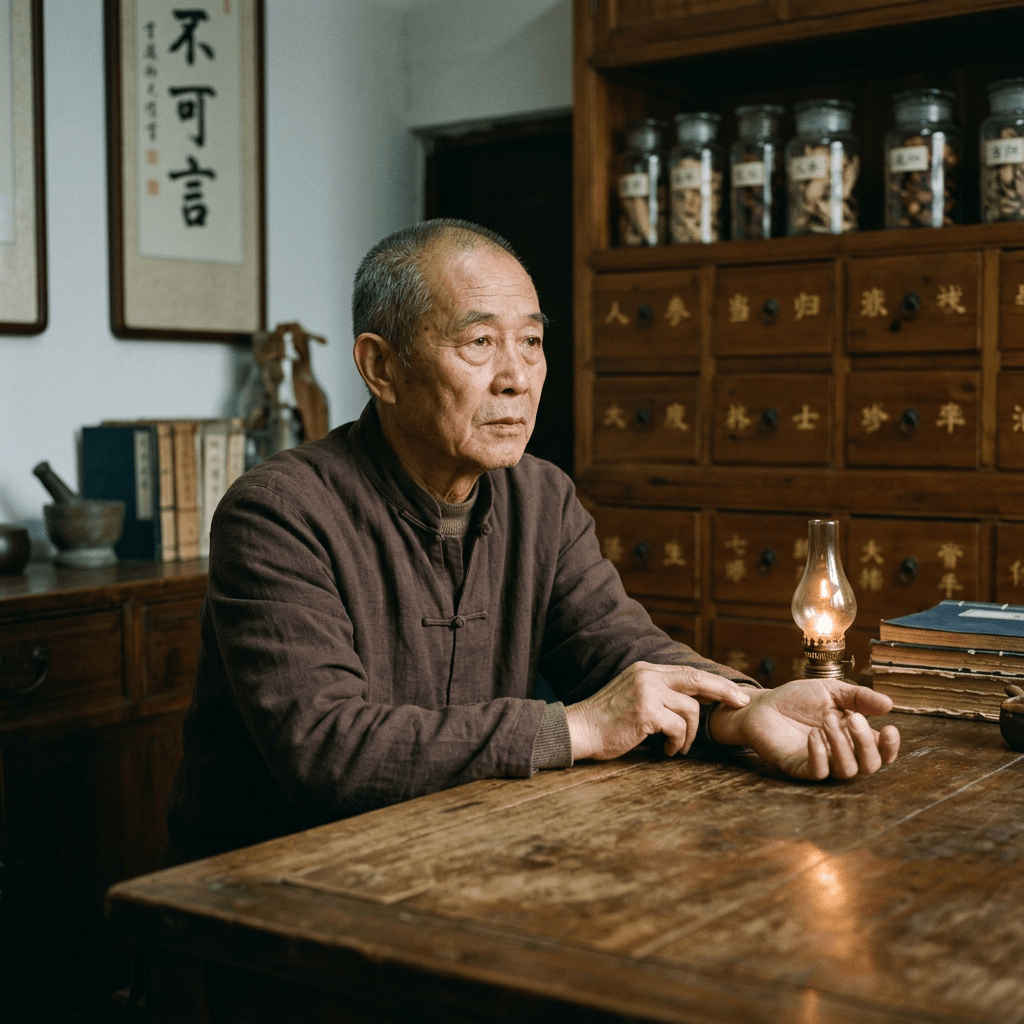
Subtle Self-Assessment tools to measure your own progress
As an acupuncturist, I use the radial wrist pulse at the start of every assessment. It is like a handshake, an initial move into the energy field of another. Using this type of pulse diagnosis on oneself may help monitor and understand one’s energy dynamics.
James Nestor in his seminal book, Breath, interviewed a leading scholar of Pranayama, Professor De Rose of Brasil, who declared that science was “looking in the wrong places” and missing the mark in researching breath practices. How do we look for Prana/Qi or what I call bio-energy using scientific models based on matter alone?
The field of acupuncture may help. Much of acupuncture is substantiated, particularly the mechanism or energetic anatomy with recent findings on the interstitium. Also, the outcomes of quality studies on acupuncture are positive for many conditions.
However, much of acupuncture is the encounter with something subtler than matter, something we call Qi that can influence our seemingly dense world–and also be a link to something wordlessly spiritual or transcendent.
When a nurse or a doctor feels your pulse, they check the rate and quickly move on to machinery for gathering information. When an acupuncturist or Chinese herbalist feels the same pulse, they may be transfixed there for many moments, correlating what is felt at several fingertips with vast literature and extensive training on the subject.
What follows are some basic approaches for students of breath, Qigong or other approaches to cultivate health by subtle, natural means. Chinese doctors regularly use pulse assessment on themselves. I use it before breakfast to size up my energy and strategies for working with it during the day.
I taught pulse diagnosis for decades as an acupuncture teacher. My favorite was teaching a full term on Classical Chinese pulse diagnosis. What follows is a distillation of practical tips for beginners to use on themselves.
| Finding the pulse- You are looking for the radial artery: on the palm side of your forearm, below the thumb. Place the back of your left wrist on your right palm. Don’t be higher than the heart, or gravity will make the pulse unnaturally weak. Place your right index fingertip at the ‘hinge’ of the wrist. On Google Images, this is the Lung 9 acupoint. Your middle finger lies below it, in a hollow equivalent to Lung 8. The ring finger is equally spaced. |
Notice how our most-used form of pulse diagnosis in acupuncture uses the Lung channel. So to get to know someone, start with the breath.
| Feeling Basic Qualities- Take time for tissues on both sides to adjust and settle in. Explore the full range of the pulse, from surface to bone-deep; try to find the ‘sweet spot’ where the pulse seems most present. Then ask simple questions, like: – Is the pulse stronger or weaker than you’d like? – Does it feel relaxed and smooth, or tense? |
Self-diagnosis is impossible in any medicine, so don’t linger on your findings. Professionally, we look at a constellation of symptoms and several signs to find a meaningful pattern. For now, just let it be interesting.
The pulse responds immediately to thoughts, as well as changes in breathing. This makes it better for gauging how well a treatment or intervention like Qigong is working. So feel your pulse before and after a meditative practice, to substantiate the sometimes subtle results. But please don’t judge yourself from your pulse. Take it to a professional if you need interpretation.
| Pulse rate- The pulse is classically 4-5 beats per breath, inhale and exhale together and equal. This makes for a nice meditation. You can also time your pulse for 15 seconds. If your pulse is higher than indicated above, or above 88 beats per minute, then you may have a condition of Heat. If it is below 64, then you may have Cold. Over time, aim for practices, foods, and treatments that regulate the rate to normal. |
Pulse rates are higher for children, who are naturally warmer and more Yang.
Slow pulses are sometimes prized in western terms as a feature of athletes. The finding in both Ayurvedic and Chinese pulse diagnostic systems is that slow pulses may be due to over-exertion, causing Cold or what Chinese medicine calls Heart Qi Deficiency.
Students I’ve taught with pulses below 60 engaged in a learning experiment with warming foods, such as ginger, garlic, chilis, etc. After a matter of weeks, their pulse rate would increase, they would feel less cold, and better overall.
Again, hold this information lightly. Don’t rush to conclusions, and get treatments when concerned.
| The pulse Microsystem- the world under your fingertips. A key feature of Chinese medicine is that each part reflects the whole. Imagine that under your fingers is a human body, with the head closer to the hand & under your index finger, and the feet under your ring finger, when pressed deeply. The middle finger reflects the solar plexus, between the diaphragm and navel. The left pulse reflects the left side of your body…. |
The most common pulse pattern for half my patients is to have a very weak or absent pulse under the ring finger. This corresponds to the lower half of the body.
The Inner Classic of acupuncture looked at human energy to be like plants. The roots are the legs, lower abdomen and lower back.
So, combined with other signs, this pulse finding would be of weak roots or resiliency. This common affliction is why so much of Qigong focuses on the lower abdomen, to build up more Qi there.
Changes in that pulse pattern can come quickly, with a shift of breathing, intention or simple awareness. When I ask patients to think of their belly, or breathe into it, it is fun to watch the pulse balance in response.
| Organ Correspondences- You could stop right here, but if you’ve had acupuncture or read a bit about it, this will give you more specifics to explore. To move the Qi in a harmonious way in the body, I like to start by feeling the Root pulse under your ring finger, whether starting on the left or right side. This corresponds to the Kidney organ and channels. This energy is deep, so you may need to feel towards the bone for it. Chinese medicine is unique in assigning different functions the left and right kidneys. The kidneys are important as the root of Yin and Yang. The left kidney is Yin, which is calming, cooling and supporting. The right is Yang, more warming and activating. You want the two root pulses to be balanced, like having two good legs to stand and walk on. Next, feel the middle position under your middle finger on the left. This is the Liver organ and channel deeply, and the Gallbladder on the surface half. One of these organ pairs is typically stronger than the other. Lastly on the left, feel the Heart organ and channel at the index finger. It is high and light under your finger when healthy. Now for the right side- Kidney Yang under your ring finger (along with related organ systems). Spleen underneath the Stomach at the middle position (middle finger), and lastly the Lung under the Large Intestine under your index finger. The Large Intestine channel goes to the sinus, so it is crucial for breathing. Each of the organ channel pathways are very specific and eventually useful to know. All in all, look for just one or two glaring irregularities under your fingertips: one pulse position may be entirely absent or very forceful. Hold the information lightly, without judgment or rushing to conclusions. then try a few rounds of breathing or ten minutes of Qigong or yoga, and then see what you find. This will reinforce your practice. |
Why is the Spleen pulse on the right, and Liver on the left, when those organs are on the opposite side of the body? Ayurvedic pulses from ancient India reverse them, compared to Chinese.
My finding is that a ‘liver’ in Ayurvedic medicine is different from what is described in traditional Chinese medicine, and different again from western bio-medicine.
I had two students who were MDs who asked me this question: I had no answer. They thought about it for a year and researched a bit to discover why. The answer lies in the field of embryology: In the fetus, these organs start on opposite sides. In a sense, we are feeling the energetic trail left behind. We find this to influence the channels and symptoms in patients. On palpation, liver and gallbladder points tend to be more active or tender on the left side, while stomach or spleen points register more on the right.
So based on the patient example of my students, keep track of your questions in this field. They may take time to answer, but they will be illuminating when they come.
In my work, I use the pulse as an entry point to begin explorations, along with symptoms and other signs. The pulse responds quickly to momentary influences, such as breath or even thoughts. In this regard, it is better for monitoring an intervention such as acupuncture or Qigong. Remember not to use the pulse as a final answer for diagnosing, rather a beginning for dialogue instead.


Thanks for sharing a mutual interest